
Last year, we shared a blog called If You Go Down to the Woods Today, celebrating a wonderfully unique study site at Woodchester Park, nestled on the western edge of the Cotswolds Area of Outstanding Natural Beauty. For half a century now (yes, half a century!), researchers have continuously monitored the local badger population, uncovering cutting‑edge social, epidemiological and ecological insights into two ancient species: the European badger and Mycobacterium bovis.
But what we did not talk about was the other side of the science, the bit we are not really meant to mention too loudly in case someone thinks we have gone soft. The badgers we know. The badgers we recognise. The badgers who, despite our best attempts at scientific detachment, have wriggled, snorted and peanut‑munched their way into our working lives and, occasionally, our hearts.
Consider this my confession.
Back to where it all began
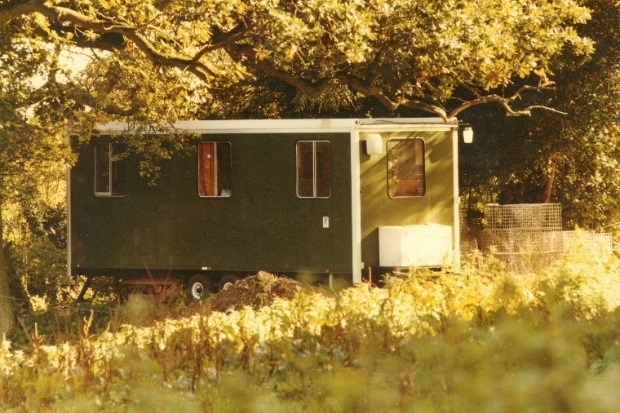
Fifty years ago, the very first badger was caught and released at Woodchester Park, marking the beginning of what we believe to be the longest continuously running study of a wildlife population and an infectious disease anywhere in the world.
These days, of course, every badger we catch is given a unique identifying tattoo: a letter for the year, and a sequential number. A kind of highly organised, wildlife‑friendly Dewey Decimal system. But in those early days of the project, before we developed our current protocols, badgers were simply given names.
And so, the study began with a young female called Miriam.
She lived in Beech Sett, just down the track from our office today (a sett being the underground network of tunnels and chambers designed, engineered and apparently constantly redecorated by badger civil engineers). Miriam shared her home with a male called Reg, caught a week later, and another female, Rapi. Rapi was lactating when checked in July, so we can safely assume the sett was a lively underground nursery at the time.
I like to imagine those early researchers listening to the rustles and thumps underfoot, wondering where this new adventure would lead. I doubt any of them thought that fifty years later we would still be here monitoring the descendants of those they first caught!
Rustic beginnings and wobbly badgers
Diagnostic testing in the early days was… let us say “more rustic” than today. Miriam herself was anaesthetised out in the field, where she had three swabs taken for M. bovis culture (all negative). According to the notes, she “came around pretty quickly” and then wobbled off back down her sett.
If you have ever seen a mildly disgruntled, slightly woozy badger wobble home after a veterinary procedure, you will understand why that sentence has remained legendary in the archives.
Today, the process looks very different. As our knowledge has grown, so too has our commitment to ensuring the welfare and comfort of the badgers while they are with us. We carry out two nights of surveillance for each part of the population, every season. Badgers stay overnight in our bespoke holding facility so they are not recaptured on the second night. On day two, once the vet or trained anaesthetist is satisfied that they are fully fit, they are released, usually with a parting glance that says, “Thank you, but I will be telling the others about this.”
When twelve badgers became one hundred and forty-six
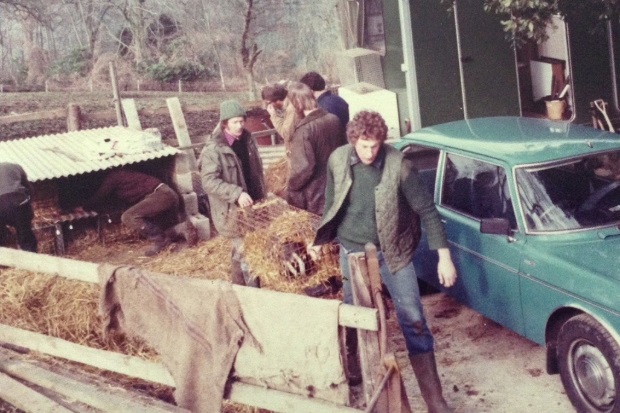
While Beech Sett was the first to be surveyed, things escalated quickly. In the first year, twelve badgers were caught. The next year, sixty‑two. The year after that, one hundred and forty‑six. Badger enthusiasm for peanuts has always been consistent.
Naming the badgers did not last long, though honourable mentions must go to Bernhard, Noears, Ripper, Scarface, Lumpy, Clubfoot and Baz. (Baz, for the record, had absolutely enormous feet. Or possibly a small body. The debate continues.)
But even with the switch to tattoo IDs, we have all had our favourites.
The ones who stay with you
My first favourite was 42A, an elderly female when I joined the team. She had a strong preference for home comforts (she did not roam far) and had an even stronger preference for peanuts. A sensible woman, really. She lived to ten years old and likely passed away last year, as it was the first year we did not see her. As our genetic testing efforts ramp up, I am looking forward to tracing her family tree. I suspect she will have a sizeable dynasty.
My new favourite, though, is 6Q, born in 2024. The vet describes him as “a bit stroppy”, which I think is entirely unfair… he simply knows what he wants, and that thing is: “peanuts, immediately, please.” We have spotted him at nearly every opportunity he’s had to visit the traps. I like to think of him as our keenest volunteer.
We are already looking forward to seeing him again in May, when the study resumes after the close season which is a quiet, respectful pause while dependent cubs are being born safely underground and finding their confidence out in the woods.
What fifty years really means

Celebrating fifty years of this project feels monumental. What began as a short‑term experiment undertaken by a handful of pioneering ecologists has grown into one of the world’s most remarkable long‑running studies of natural disease dynamics.
Because of this study, we have:
- unprecedented insight into social behaviour and group dynamics in badgers
- rich, decades‑long data on M. bovis infection and transmission
- a scientifically invaluable record of life histories, genetics and ecology
- and a deep (if sometimes peanut‑powered) connection to the individual animals that inhabit Woodchester Park
Five decades later, the science is sharper, the questions are bigger, and the badgers are, remarkably, still turning up, still participating, and still helping us understand this ancient host‑pathogen relationship.
A moment to celebrate
On the 9th of February, the current Woodchester team gathered to mark this milestone before the larger celebrations later in the year. As we raised a cup of tea, we celebrated Miriam, the very first badger; the hundreds of researchers who have contributed their expertise; and the many thousands of badgers who have, quite literally, put their paws up for science.
Here’s to the next fifty years. And to Miriam, who started it all.
You might be interested in ...
You might also be interested in the Wind in the Willows sculpture trail at Tinkley Gate, Woodchester Park, running from 22 May to 28 June. Presented by Wild in Art in collaboration with the Animal & Plant Health Agency (APHA), the trail celebrates the 50th anniversary of the National Wildlife Management Centre this year.
8 comments
Comment by Janee Foxon posted on
A wonderful celebratory reflective blog on the terrific insightful work and all that has been learnt over 50 years. May the exploration and learning continue with the Sett family for another 50 years and more. I was 11 when this study started. I visited Weybridge (CVL) with my Biology teacher a year later for lessons in the Library. In 2008 I joined VLA, and now work in Defra Finance, primarily supporting APHA including the work of the Wildlife team.
Comment by Michael Charles Smith posted on
Wonderful story.
Comment by Madelaine Maraboli posted on
What a beautiful history and summary blog. I worked on the vaccination side for a while, and this was a wonderful reminder of the good this programme does and what it tries to discover and learn, all the while honouring its peanut loving partners.
Comment by Julie Lane posted on
Fantastic article about the amazing work of Woodchester Park. A big congratulations to all
Comment by Rudolf Reichel posted on
Many thanks for sharing this beautifully written blog. It was a pleasure to read and so good to see the scientific efforts made to improve our understanding and decision making regarding TB and badgers.
Comment by Mark Chambers posted on
A delightful, affectionate and humorous read. What a milestone, what an outstanding contribution! It's been my pleasure over the three decades that I've been around at APHA to collaborate with the excellent, knowledgeable and hard-working folk at Woodchester. I look forward to celebrating with you on the 18th and for many more years of APHA science at its best!
Comment by Hazel Turnbull posted on
Thanks for such an interesting and informative article.
Comment by Stephanie Conway posted on
I absolutely loved reading this - thank you for sharing.