
In this blog, we hear from two members of the current rabies team whose careers reflect both the evolution of rabies surveillance and the enduring importance of teamwork, expertise and adaptability.
Their reflections offer a unique insight into the challenges, achievements and unexpected moments that come with protecting animal and human health, while demonstrating why, in rabies diagnostics, we are always stronger together.
Expect the unexpected: a year as Rabies Chief Diagnostician
Charlotte Marsh
When I took on the role of Rabies Chief Diagnostician this year, I knew there would be plenty to keep me busy. What I quickly discovered was that no one can fully prepare you for quite how varied the role can be. Luckily, I joined a team with a huge depth of experience, including colleagues who have spent decades working in rabies diagnostics and have helped shape the service we deliver today.
One of the most significant parts of my role is managing testing for the PETS travel scheme. The scheme involves testing pet serum samples for rabies antibodies, helping to ensure that pets meet the requirements to travel abroad. It might sound straightforward, but there is a lot involved in getting these tests right. Testing more than 17,000 samples last year, while also meeting required turnaround times, means managing the workload can be a challenge.
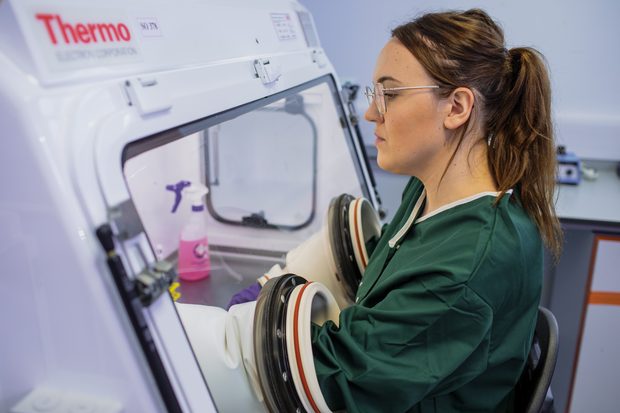
Another important part of the role is managing the testing for the bat rabies passive surveillance scheme. This long-established project monitors bats in the United Kingdom (UK) for lyssaviruses, a group of viruses that can cause rabies. While I am new to leading this work, I am very aware that I am building on decades of surveillance and expertise developed by those who came before me.
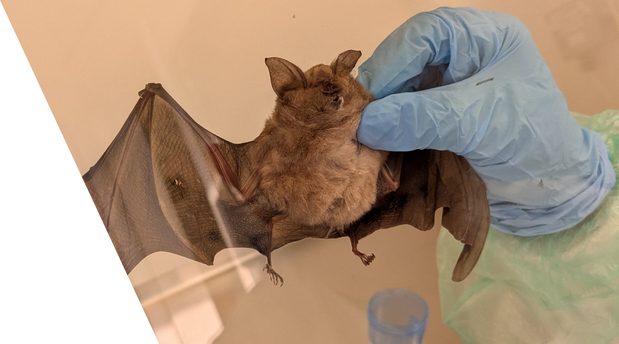
The UK has been free of classical rabies for more than 100 years thanks to the work carried out at APHA, but European bat lyssaviruses (EBLV) have been increasingly detected in UK bats in recent years. As part of the surveillance scheme, we receive more than 1,200 bats each year, with the majority arriving during the summer months when bats are at their most active.
And, of course, not everything that arrives in the laboratory is necessarily what you expect it to be. Alongside the bats, we have received specimens including frogs, squirrels and even insulation foam. One of the things I enjoy most about working in diagnostics is that there is always something new to learn, even if it is first figuring out whether a submission is actually a bat at all!
A small percentage of the bats we receive test positive for EBLV. As rabies is a notifiable disease, it is vital that positive results are identified and reported as quickly as possible, particularly if there is a reported human or animal exposure. This highlights the importance of robust testing, quality assurance and a highly skilled diagnostic team.
I am incredibly lucky to work alongside such an experienced and dedicated group of people. When the pressure is on, everyone pulls together. Whether it is managing the large volume of PETS samples, processing 40 bats a day during the busy summer months, or responding to something much more unexpected, such as testing suspect rabies animals with dubious import documents or confirming rabies in the human case last year, the team steps up. Listening to colleagues talk about the changes they have seen over the years gives me a real appreciation for how much the team has achieved and how its remit has grown.
There is also a huge amount of quality assurance involved in running these tests. It may not always be the most visible part of diagnostic work, but it is absolutely essential. Every stage of the process needs to be robust and reliable, because behind every sample is a decision that can have important consequences for animal and human health.
Looking back over the year, this role has undoubtedly taught me the meaning of "expect the unexpected". No two days are quite the same, and just when you think you know what is coming through the laboratory door, along comes a pile of moss imitating a common pipistrelle.
And now, as another year approaches, I find myself wondering one thing: what will next year have in store for us?
Expect the unexpected: thirty years in the Rabies Team at Weybridge
Lorraine McElhinney
I started work as a Scientific Officer in the Rabies Team in April 1996, before the UK's first case of bat rabies and before the pet travel scheme was introduced. There were six in the team, and our chief diagnostician was shared with the Avian Influenza workgroup. Back then, our team handled the rare suspect human and animal cases and tested only 200 sera a year for imported vaccinated pedigree dogs and cats, a small number of animals that died in quarantine and less than 200 bats per year.
Looking at the work undertaken by the team today, it is remarkable to see how much has changed. Watching colleagues like Charlotte take on the role of Rabies Chief Diagnostician has reminded me how much the service has evolved, while the fundamental purpose of protecting animal and human health has remained the same.
In the past 30 years, I have worked with some amazing scientists through many changes and challenges. The detection of bat rabies in two species of bats in Great Britain led to a five-fold rise in bat submissions, while the growing popularity of international pet travel schemes resulted in a 100-fold increase in pet testing at APHA. We have also responded to the tragic confirmation of human rabies in travellers and expanded our international engagement as World Organisation for Animal Health (WOAH) and World Health Organisation (WHO) international rabies reference laboratories.
One thing that has remained constant throughout those years is the dedication of the people involved. Whether responding to a complex suspect case, a surge in bat submissions or a new challenge nobody has encountered before, the team has always risen to the occasion. It has been incredibly rewarding to see new generations of scientists and diagnosticians bring fresh ideas and enthusiasm while continuing that tradition.
I have also loved the wider connections with other scientists in the Science Directorate at APHA, Veterinary Exotic Notifiable Diseases Unit (VENDU), and imports and border staff. What started as a team of six has grown into a team of 24 staff with a remit to undertake research and testing for rabies and other viral zoonoses.
I feel very privileged to have had such an amazing career in the rabies field at APHA and can certainly echo Charlotte's sentiments that my day job is far from predictable. In fact, despite thirty years of experience, I am still regularly surprised by what each day brings.
Today, I am lucky enough to be in Kruger National Park where two of the team, Megan Golding and Joan Cuesta, will present their rabies PhD research to an international audience. Seeing colleagues share their work on a global stage is a reminder of how far both the team and the science have come.
Building on the team's commitment to innovation and scientific excellence, one area helping to shape the future of rabies diagnostics is artificial intelligence. In the video below, Joan Cuesta shares his research exploring how AI could support and enhance diagnostic approaches, demonstrating how new technologies are helping advance rabies science at APHA and beyond.
Watch the video below to learn more about Joan's work in AI and rabies diagnostics.
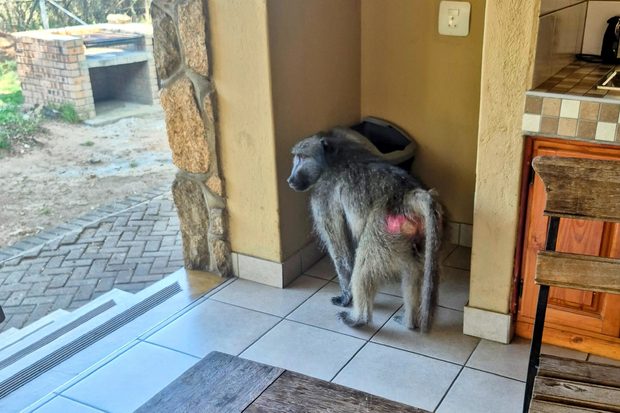
Whilst writing this blog, and just after attending an online meeting with other heads of rabies labs, I was joined by a baboon looking for food in my bin. Thirty years later, it seems the lesson is still the same: expect the unexpected.
Recent Comments