Disease surveillance plays an important role in helping us understand the health of wildlife populations, allowing us to detect, investigate and learn from findings that would otherwise remain unknown.
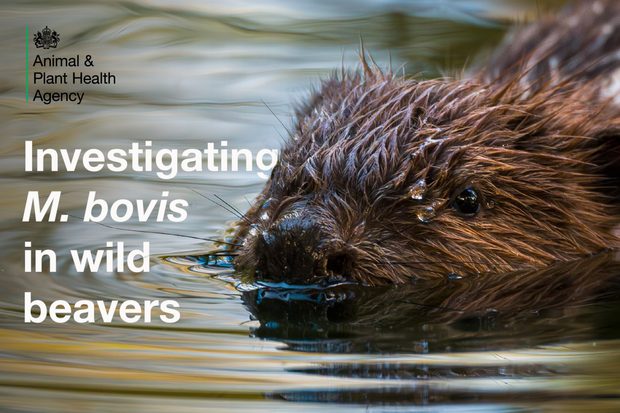
Recently, routine wildlife disease surveillance led to the identification of Mycobacterium bovis (the bacterium that causes bovine tuberculosis in cattle, bTB) infection in two wild beavers found dead in south-west England. These findings are helping us build a better understanding of how disease affects different wildlife species and demonstrates the value of ongoing wildlife surveillance.
How were the cases identified?
The two wild beavers were found dead at separate locations in the south-west of England. The first beaver was found dead in August 2026. Following the established disease surveillance protocol for beaver releases, a post-mortem examination was conducted at ZSL (Zoological Society of London). Lesions suspicious of tuberculosis were identified by the pathologist, leading to microscopic examination with a specific stain (Ziehl-Neelsen) used to indicate presence of mycobacteria. This highlighted the possible presence of TB-associated bacteria in the lungs. Therefore, samples from this beaver were submitted to the APHA laboratory for testing and returned positive results for M. bovis by polymerase chain reaction (PCR) test.
Given this new finding, the pathologists reviewed 70 previous beaver post-mortem reports conducted as part of their routine disease surveillance programme. This highlighted a potential second beaver which had some similar pathology findings at post-mortem to the first positive beaver but had tested negative on a Ziehl-Neelsen stain for mycobacteria. Because both pathology and tissue samples had been retained through the Wildlife Recovery Support Unit’s archive and database, it was possible to provide tissue samples from this second suspected beaver to APHA for further testing. These samples subsequently also returned positive results for M. bovis by PCR.
The second beaver is believed to have been born in the wild and was found dead in spring 2025.
Further laboratory investigations are ongoing to provide additional information about these cases. These may allow us to better understand where the beavers may have become infected.
What do we know so far?
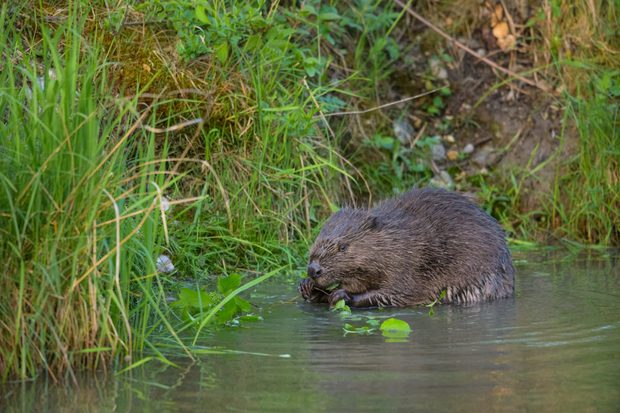
These are the first confirmed cases of M. bovis infection in beavers in Great Britain, and, we believe, anywhere in the world. All mammals can potentially become infected with M. bovis, and beavers are thought to be spillover hosts.
It is not currently known when these animals became infected or the source of their infection. Both animals were found in the High Risk Area (HRA) of England for bTB, where there is a high incidence of M. bovis infection in cattle and where infection is known to be present in wildlife. The two cases are not expected to be connected, as the beavers were found at geographically distant sites. However, there are still important gaps in the available evidence and further work is being undertaken by APHA to improve our understanding of these cases.
What does this mean for disease control?
The cases occurred in the HRA, where cattle herds are already subject to regular surveillance and testing for bTB. There is no requirement to implement any statutory measures such as additional surveillance of any potential neighbouring cattle herds to where the beavers were found.
As with any new disease findings, APHA and partners will continue to assess emerging evidence and review any implications for surveillance and disease control activities. Studies have consistently found that bTB transmission occurs far more frequently between cattle than between wildlife and cattle. Based on the information currently available, these findings do not change our assessment of the overall bTB risk to cattle, other wildlife and people in the affected areas.
APHA have published a new page on the TB Hub website to provide advice and guidance to farmers who graze livestock in areas where beavers are present.
Natural England have published a blog setting out how they are taking account of these findings in their licensing of beaver wild release and enclosure projects. They are reviewing all proposed beaver movements on a case-by-case basis considering the source population, family and movement history of the animals concerned.
APHA, Natural England and Defra will continue to work closely together as more information becomes available for these cases.
Leave a comment