I am not a medic, but my title is "Dr."
Marking International Day of Women and Girls in Science, APHA Lead Scientist Dr Choudhury shares her journey into research.
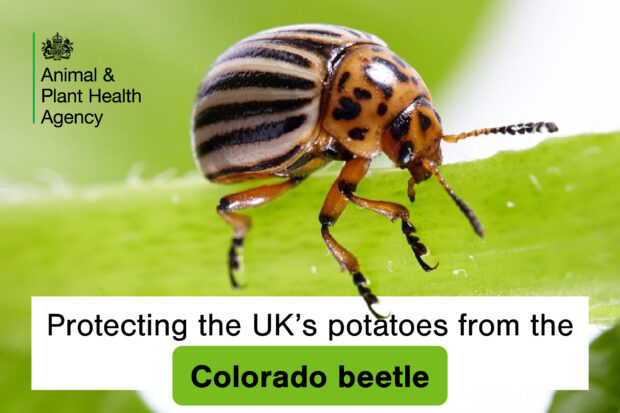
Calling on gardeners, allotment owners and the general public to look out for the Colorado beetle – a plant pest that poses a major threat to the UK’s food security.
Genomics enhances plant disease management by enabling early detection and real-time tracking. APHA-led scientists, in collaboration with key organisations, in the GAP-DC collaborate to monitor invasive pathogens, improving proactive disease control across animals, plants, and ecosystems.
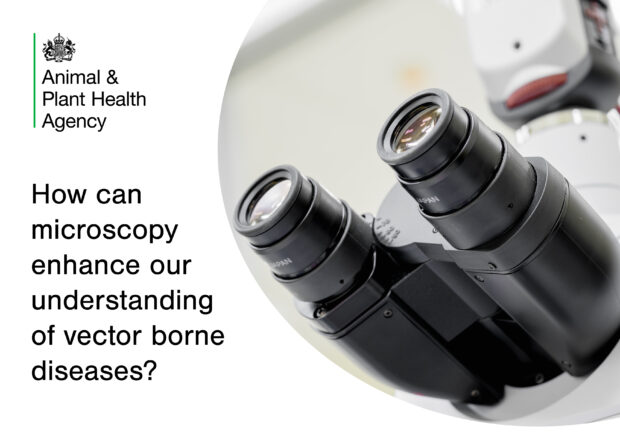
Dr. Luis M. Hernández-Triana, Biodiversity Research Team Lead and APHA Vector-Borne Diseases Discipline Lead, tells us more about APHA’s growing work in vector borne diseases (VBDs).
Aled Edwards, Head of England Field Delivery for the agency reveals how rapid response by several teams working closely together is helping to keep us safe from animal diseases such as foot and mouth, every day of the year.
This World TB Day, APHA disease scientist Siân Powell describes a long-standing project at Woodchester Park to better understand TB disease spread in badger populations and advancements in our diagnostic capabilities.
It was not until her last year at university that APHA Scientist Dr Samantha Henry realized her true passion for veterinary research, a journey that began in Jamaica and led her to the UK. This British Science Week, let us dive deeper into her inspiring story in this engaging three-minute blog.
Dr Jess Parry, our Epidemiology Workgroup Leader, reflects on her path from a curious young girl, passionate about biology to her current role as a scientist and leader at APHA.
An increase in online plant sales has brought an increased threat of plant pests and diseases. Dan Munro, Senior Technical Manager for Plant Passporting at the Animal and Plant Health Agency (APHA), explains what APHA, as part of the United Kingdom (UK) Plant Health Service, is doing to reduce these risks.
In August 2024, our National Bee Unit invited participants from Ghana for a week-long intensive training on honeybee health, husbandry and honey production in the UK.
In response to a bird flu infection in cattle in the United States, APHA was assigned to provide expert advice and conduct urgent diagnostic investigations to evaluate the potential threat to UK cattle populations.
Recent Comments