World AMR Awareness Week 2026 takes place from 18 to 24 November
Some bacterial infections can be treated with antimicrobial drugs. But what if the bacteria responsible could no longer be treated effectively with antibiotics? Antimicrobial resistance (AMR) is making that possibility increasingly real, allowing resistant bacteria to move silently through animals, food and the environment before reaching people. In reality, these bacteria can also cross national borders, meaning that what begins on a farm or in a food production setting has the potential to affect us all.
For World Antimicrobial Resistance Awareness Week, we wanted to share a new project funded through the Integrated Security Fund and delivered with colleagues at Veterinary Medicines Directorate (VMD). It is exploring whether imported raw meat intended for pet food could provide a route for resistant bacteria and their genes to enter the United Kingdom (UK).
The project is called Antimicrobial Resistance Biosecurity at the Borders, or AMRBioBorders. It brings together border sampling, laboratory science, data analysis and policy expertise across government, to examine an area not currently covered by routine AMR surveillance.
Why antimicrobial resistance matters
Antibiotics are medicines used to treat bacterial infections, but bacteria can change over time and become resistant to the medicines used to tackle the infections they cause, making those infections harder to treat. Resistant bacteria can spread between people, animals and the environment, which is why tackling AMR requires a One Health approach that considers all three together. The UK has made good progress in reducing antibiotic use and resistance in food-producing animals, but bacteria do not respect borders. The movement of people, animals and products means we also need to monitor emerging threats from overseas.
Why look at raw pet food?
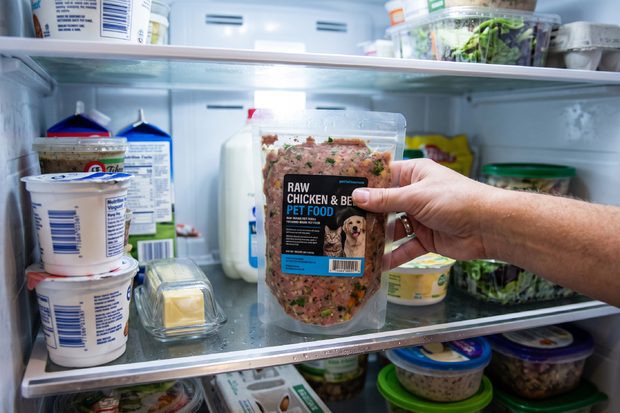
Keeping raw pet food chilled and handling it carefully are important steps in pet food safety
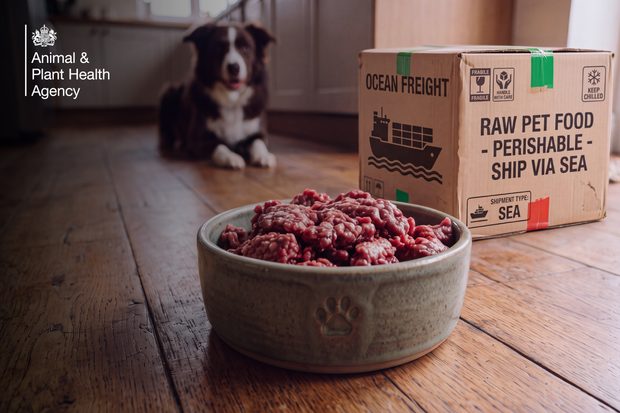
Raw pet food contains uncooked animal products such as meat and offal. Unlike cooked or heat-treated products, it does not undergo a step designed to kill bacteria before it is sold. This does not mean that every raw pet food product contains harmful or resistant bacteria. It does mean that careful production, storage and handling are important.
A recent Food Standards Agency survey examined 380 raw dog and cat food samples bought from shops and online retailers in the UK. Pathogenic bacteria were detected in 35% of the samples, and some of the bacteria found were also resistant to selected antibiotics. The Food Standards Agency advises owners to store, defrost and handle raw pet food safely to reduce the risk of cross-contamination.
Our project asks a different question: what can we learn by looking further upstream, at imported raw meat ingredients, intended to become raw pet food? At present, there is no routine AMR surveillance of imported raw meat at the UK border. We therefore may have an important gap in our understanding of what bacteria and resistance genes may be arriving through this route. Through AMRBioBorders, personnel at selected ports are collecting samples of imported raw meat ingredients destined for raw pet food and scientists at APHA are developing and applying computer-based methods to identify the bacteria and antimicrobial resistance genes within them.
Reading all the genetic clues at once
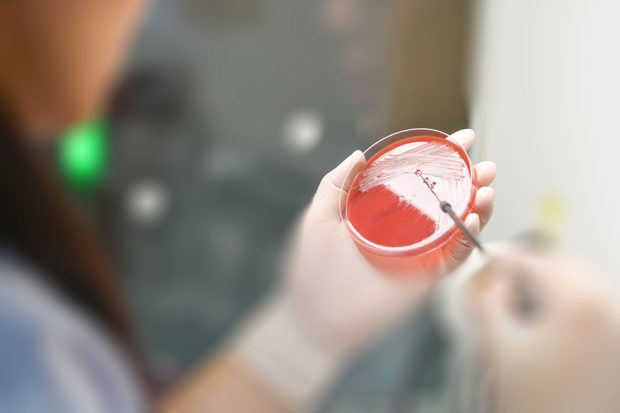
Traditionally, scientists investigate bacteria by growing them in the laboratory. This remains essential, but it can mean selecting particular organisms in advance. AMRBioBorders utilises a technique called metagenomic sequencing to look more widely.
Put simply, metagenomics allows us to examine genetic material from many different microorganisms, including bacteria, in a sample at the same time. Rather than asking only, “Is this particular bacterium present?”, we can look more widely at the microbial community and search for genes associated with AMR or disease.
Metagenomic findings would then help us select bacteria for traditional laboratory culture and whole genome sequencing. Comparing the results would allow us to assess how reliably the broader metagenomic approach detects organisms and resistance markers in this type of sample.
From scientific data to practical action

Generating data is only useful if people can act on it. This project, therefore, goes beyond the laboratory. It brings together APHA, Veterinary Medicines Directorate, Food Standards Agency, UK Health Security Agency, the Department for Environment, Food and Rural Affairs, port authorities and others with responsibilities across the raw meat and pet food chain.
By mapping those responsibilities alongside the scientific evidence, the project could identify gaps, support more joined-up surveillance and help government decide where future monitoring would have the greatest value.
The findings could also help us work constructively with industry to build a better evidence base, identify where risks may be mitigated and support proportionate decisions that protect animal and public health.
Building a clearer picture
This research is just getting started, so we do not yet know what the samples might reveal. That uncertainty is precisely why the work matters. We may detect antimicrobial resistance mechanisms that are already familiar to us, or resistances that we have not detected in the UK. We may find that risks vary according to the type or origin of a product. We may also learn important lessons about the practicality of border sampling and metagenomic surveillance. Whatever the findings, the project has the potential to give us a clearer view of a currently underexplored route into the UK.
This is what One Health action looks like in practice: scientists, policymakers, border professionals and industry working together across organisational boundaries. By combining new technology with existing expertise, we can improve our ability to spot potential threats early and make decisions based on evidence.
AMR is a shared challenge. Understanding how it moves is one of the first steps towards stopping it.
Leave a comment