Rabies is a devastating disease that affects mammals, including humans, and remains an endemic disease in many countries globally. In this blog, we hear from APHA’s Mr. Leigh Thorne from the National Rabies Laboratory, on World Rabies Day 2023.
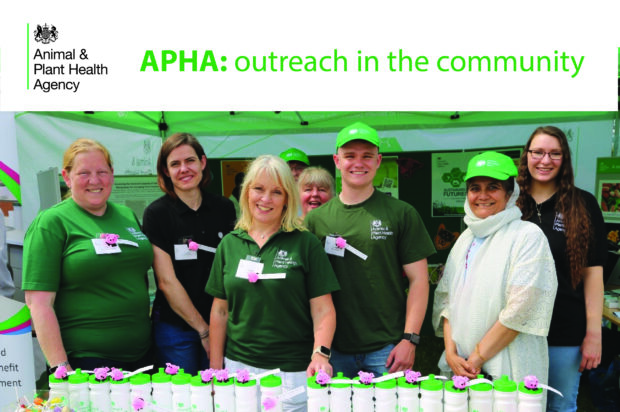
Sarah Stewart, Science Stakeholder Engagement and Events Manager at APHA describes how she is building our APHA Science STEM Ambassador Group, recent events we have attended and how you can invite an ambassador to your event.
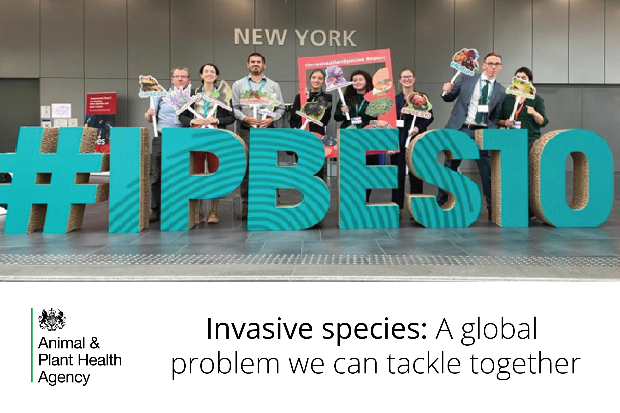
This week, a major new report on invasive species was published by the Intergovernmental Platform on Biodiversity and Ecosystem Services (IPBES). It highlights the seriousness of the threat posed by invasive non-native species but shows that by working together with greater coordination and resources we can successfully tackle the threat.
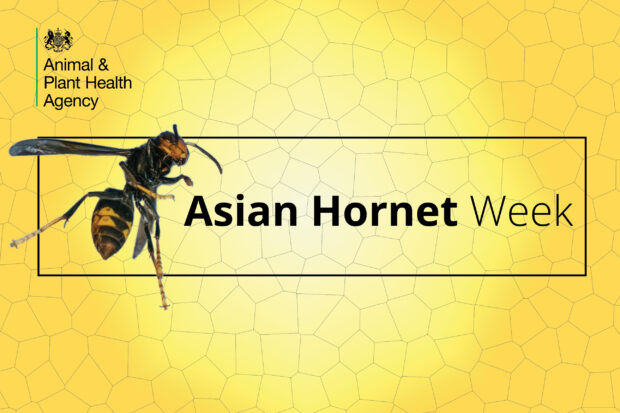
To mark this year’s Asian hornet week, Rebekah Clarkson from APHA’s National Bee Unit (NBU) talks about the work the NBU is doing to crack down on this invasive species and how you can report sightings.
With climate change impacting mosquito populations in the UK and Europe attention is turning to the increased risk of new diseases becoming established in our mosquito populations. APHA’s Vector-Borne Diseases Workgroup Head, Nick Johnson, and Dr Karen Mansfield, Dr Estela Gonzalez-Fernandez, Sanam Sewgobind and Insiyah Parekh from the Arbovirus Research Team reveal more.
Antimicrobial resistance (AMR) is one of the top ten global public health threats. Read more about how APHA and partners harness their expertise to help partners located in low- and middle-income countries to develop their approach to investigating AMR and antimicrobial use.
Temperate regions such as the UK, are now seeing repeated introductions of invasive mosquito species, as well as mosquito-borne viruses not previously detected in the UK. Doctor Luis M. Hernández-Triana, APHA’s Discipline Champion and expert in the field of vector borne diseases describes how APHA is involved in vector borne disease research and the importance …
Fin Twomey, Head of the APHA’s Surveillance Intelligence Unit, recently attended the 2023 Stakeholder Conference of the One Health European Joint Programme, a five-year partnership programme across the fields of public health, animal health and food safety.
In this blog to mark International Women in Engineering Day on 23 June, we hear from Jenn Harris as she talks about her journey to a career in construction and engineering and why the Science Capability in Animal Health (SCAH) programme has given her the perfect opportunity to combine her love of science and engineering.
Once established, invasive non-native species can threaten biodiversity and can be extremely costly and difficult to control. APHA Director of Science Transformation, Jenny Stewart and Lucy Cornwell from the GB Non-native Species Secretariat are sharing some of the ways that everyone can help.


Recent Comments